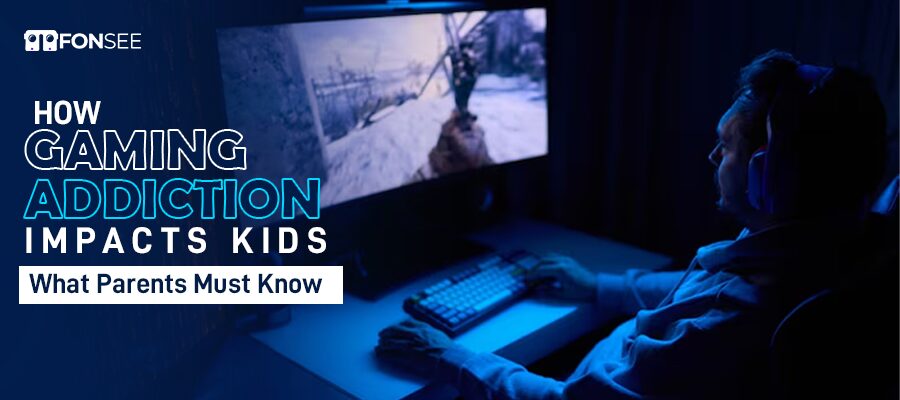
Video games are now the most-loved way to spend one’s leisure time for everyone with internet access, from kids and young people to the aged, who are interested in video games. Through video games, an individual can enjoy and interact with fellow players, gaining satisfaction upon finishing levels and feeling a sense of belonging. Mild gaming is believed to help improve creative and critical thinking. Gaming addiction, on the other hand, has many adverse effects, some of which are: hardly in taking proper sleep and sometimes no performance is found in school work.
In this post, we’ll delve deeper into gaming addiction and how it impacts children in everyday life, as well as tools available to help manage the growing issue. And, naturally, how parents can leverage tools like FonSee and enforce better gaming habits.
Understanding The Truth Behind Gaming Addictions
Video gaming is a fun activity that many people engage in during childhood. Still, it’s very easy to forget that once one has fallen deeply in love with it and decided this sort of life is theirs. However, being well aware of the fact that games deliver unlimited fun and value to children, they will likely be very desperate to stop playing them. What initially looked like an innocently fun activity would start to interfere with school and emotional stability.
Video gaming needs to replace one’s reality, as most parents would observe changes, especially mood swings and motivational problems. Firstly, gaming addiction, especially among kids, doesn’t necessarily mean that the kids are addicted to playing. It’s an already proven behavioral concern.
How Gaming Hooks Children: Trends Every Parent Should Know
The gaming world keeps evolving, and the new experiences that kids are drawn to combine fun, competition, and connectivity. Most of the above elements are designed to be entertaining, gratifying, and hard to walk away from. That renders it hard to maintain a balance among kids. Becoming aware of these tendencies allows parents to have a more accurate perspective of what makes certain games too difficult to resist and how such games affect everyday routine, feelings, and even behaviors.
Battle Royale Games
Battle royale competition games have attracted children with their constant action, gameplay changes, and excitement, achieved through large-scale fighting. There are live maps and timed events that create a sense of urgency and encourage kids to come back. Team play and competition force children to do or practice challenges to match their friends.
Mobile Gaming
The popularity of mobile gaming is that children can play anytime, anywhere. It is easy and difficult to resist. Such games tend to offer quick fixes, fast levels, rapid rewards, and repeated notifications that keep a person continuously involved. Since cellphones are never far away, kids tend to slip into the sessions during the day without realizing how the minutes are flying, and it becomes difficult for them to juggle school and offline activities.
Social Gaming
Social gaming allows children to play with their friends, create teams, and chat between games, thereby adding meaning and interaction. Multiplayer platforms may join the social life of a child. It is difficult to get out of the game when your friends have already turned on. The fear of missing out, collaboration, and constant discussions might push gaming activities beyond healthy boundaries and question parents’ screen time management.
Live Streaming
Live-streaming services expose children to game influencers they idolize. Influencers motivate children to implement trends, watch extended playing sessions, and play new games. The unending influx of stimulating content makes the children spend more time on the web, whether watching or playing games. Challenges and updates are also brought about by influencers who keep kids entertained, and parents must get clear on what the platforms do to habits and time spent.
Stats on Global Gaming Addiction
Research indicates that approximately 3% of gamers meet the criteria for a gaming disorder. Other studies report a range of 1.9 to 5 percent, depending on the country and age. With problematic gaming habits, there are 3.3 billion active gamers globally, implying that there are more than 60,100 million inactive gamers.
Gaming addiction symptoms are more common in teenagers – researches indicate that 8-10 percent of adolescents have a behavioral problem related to gameplay. There is a higher likelihood of boys developing gaming addiction as compared to girls.
The levels of addiction are high in countries where the number of those addicted is high, like the USA, China, Japan, and South Korea, with up to 12% reported in some areas.
Drowning With Gaming Addiction in Children: How Can Parents Be Managed?
Gaming addiction does not mean that it is bad, but it should be disciplined with the assistance of establishing a healthier advancement. The first would be to determine explicit boundaries of screen time. It is the responsibility of parents to set the rules for kids’ playtime and games. Doesn’t matter; it will be an hour, skipping one day or week. Second, if parents create a techno-free zone in their house, they can also win the battle in this digital world.
Communication matters too. Choose the communication pattern and first ask your kids about their online activities. But as we know, everyone has a different nature, which is why many kids are irritable, and some are friendly. Another successful measure is the use of parental control tools. Used relatively and regularly, they lead children to healthier habits without struggle.
Reducing Game Addiction with FonSee Parental Control Software
FonSee is a parental control app that helps parents manage their child’s digital behavior in smart, flexible ways. It does so behind the scenes, lets parents see how much time their children spend on games, and steers them toward more healthful online behavior. Fonsee is helpful because it addresses gaming addiction, too. The gaming addiction tends to rise when parents have no idea how much or even how long a child is playing. FonSee fixes, which give parents:
Clearly defined reports on the activities, what games were played, and how long they lasted.
Major Features of FonSee That Resolve the Addiction to Gaming
Here’s a full look at the FonSee features that reduce game addiction in kids.
Apps/Games Blocking
The blocking feature of FonSee will also block an intended gaming application just before it is accessed to avoid distraction or overuse. Parents do not have to engage in endless battles; they only need to block applications and focus on their studies, sleep, or time with their family when the moment comes. This action will be helpful for the kids and peaceful for parents.
Screen Time Limits
Parents can prevent children from staring at screens for hours each day or each week by imposing screen-time restrictions. When the limit is reached, FonSee blocks the child’s access to his games on a computer right now, and, as we know, early love for the game-obsessed phenomenon still helps put on headphones. Boards promote relaxation, outdoor activities, and rest. With time, children learn about balance and time management, which are effective weapons in the battle against video game addiction.
Screen Recording
The screen recording feature in the FonSee app lets parents see what the child is doing on the device. It comes in handy for detecting excessive gaming, unsuitable games, and circumventing restrictions. Postings provide a clear picture of the trends that would otherwise be hidden. Parents can address issues rather than rely on estimates. Monitoring screen time enables parents to have productive discussions and guide their child toward safer, healthier online behavior.
Real-Time Alerts
Parents can also get live alerts when children open blocked apps, exceed game-playing limits, or when games encourage risky behavior. Notifications remind parents about the indicators of addictions, including attempts at breaking the limits after late hours or having made multiple attempts. Being aware of what is going on at any given moment helps them to respond calmly and competently, and they control the situation, downplaying stress and fights.
Remote Access Control
FonSee enables parents to monitor all settings remotely, allowing them to press a button to block an app, change limits, or lock the phone from anywhere in the world. This is particularly useful: When your kids are at home (or just having a playdate!) And when devices are being used at school. A remote control allows the same limits to be enforced no matter where one goes, giving parents peace of mind and flexibility as they go about their day. It can help maintain good online behavior without direct supervision.
Parent’s Guide: Proven Tips to Reduce Your Child’s Gaming Time
- Include your child when you set guidelines, so that they feel both part of the process and responsible for their gaming practices.
- Leverage activity reports of the parental control app to talk about habits and to have good conversations.
- Stay on top of the latest games and trends to know what your child is doing.
- For younger kids, establish regular times for gaming so they’re less likely to become addicted.
- Positive behavior can be rewarded when youngsters follow limits and take breaks from gaming.
- Restrict the time period of the devices, such as during mealtimes, bedtime, or family time, to prevent excessive use.
- Keep an eye out for emotional changes or gaming-related frustration and calmly address them.
- Be a good example, and keep healthy screen habits yourself, like encouraging balanced routines.
Conclusion
With Gaming, children experience challenges, creativity, and interaction, activities that determine the relevance of a fun practice. On the other hand, negative consequences of video gaming due to overuse are sleep problems, impaired school performance, and difficulties in relations with family. As such, parents must find the right way to ensure that their children strike a balance, and that’s where FonSee’s use comes quite handy! FonSee ensures that your son stays well-balanced while enjoying gaming.