
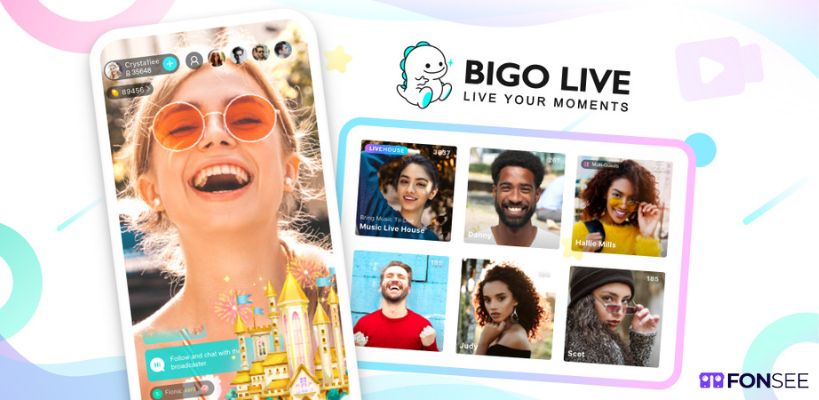
Bigo Live has become one of the largest live-streaming apps globally, sitting with TikTok Live, YouNow, and Twitch. But unlike Twitch, which leans heavily on gaming, or TikTok Live. Which is bolted onto a short-video giant.
Bigo Live began as a pure live-streaming and social-discovery platform. That focus then shapes nearly all of its actions. The result is both positive and negative.
This review explains what Bigo Live is. It explains how the app works day to day. It also covers features that set it apart and how streamers make money on it.
The safety questions that come up constantly in app store reviews and parenting forums. By the end, you should see whether it’s worth your time. It will indicate if it’s worth your data or your teenager’s screen time.
What Is Bigo Live App?
Bigo Live is a live-streaming and social-video app developed by BIGO Technology. A company headquartered in Singapore with roots tracing back to the team behind YY, one of China’s earliest live-streaming platforms.
Bigo Live launched in 2016 and expanded aggressively across Southeast Asia and the Middle East. It then grew its user base in South Asia, Latin America, the US, and Europe.
The app’s core feature lets anyone go live from a phone. It broadcasts to an open audience and enables viewer interaction through comments, gifts, and video chat. Viewer interaction comes through comments, gifts, and video chat.
It blends a talent show, a group chat, and a casino. Streamers perform, chat, sing, or play games, or simply talk. Viewers reply with comments and paid virtual gifts that pay the streamer.
Bigo Live reports hundreds of millions of downloads worldwide. Top apps in social and entertainment lead in gross revenue on both stores. The gifting economy largely drives this rise.
How Bigo Live App Works?
Users view started as simple, and that ease strengthens the app’s appeal while inviting scrutiny.
Sign-up: You can register with a phone number, email, or by linking a Facebook or Google account. Bigo Live asks for a birth date during sign-up to enforce its stated 18+ age policy.
Browsing: Inside, the home feed presents a grid of live broadcasts. The grid is sorted by category, including trending, nearby, gaming, music, chatting, and many others. An algorithm surfaces streams based on your viewing history, similar to how TikTok’s For You page works.
This means the app learns quickly what keeps you watching.
Watching and interacting: Tapping into a stream drops you into a live chat. You join dozens or thousands of other viewers, depending on the broadcaster’s popularity. You can comment, like, follow, and send virtual gifts.
Going live: Anyone can start a broadcast with a single tap. New broadcasters typically start with a small, low-traffic feed, and the app’s discovery algorithm gradually increases visibility for streamers who maintain consistent watch time and viewer engagement. A system that rewards frequent, long broadcasting sessions.
The gifting loop: This is the economic engine of the app. Viewers buy “Diamonds” with real money, then spend them on animated virtual gifts sent during a stream. Broadcasters can eventually convert Beans from gifts into cash and withdraw it, minus Bigo’s cut.
This single mechanic shapes almost every other design decision in the app, from leader boards to badges to the pressure streamers feel to stay on camera longer.
Key Features of Bigo Live
Bigo Live has evolved for nearly a decade, and its feature set remains extensive next to newer live-streaming apps.
- Multi-Guest Live (up to 12 seats): Turns a solo broadcast into a group video chat that the whole audience can watch, commonly used for talk shows, talent competitions, and group hangouts.
- PK Battles (Player Knockout): Two broadcasters go live simultaneously and compete for gifts within a time limit; the loser typically faces a lighthearted on-screen “penalty.” This is one of Bigo’s signature features and a major driver of gifting revenue.
- Co-streaming: Lets two streamers merge feeds side by side without the competitive PK format, useful for collaborations.
- Beauty filters and effects: A standard suite of skin-smoothing, face-slimming, and lighting filters, plus AR effects and stickers.
- 3D avatars: An avatar-streaming mode that lets broadcasters appear as an animated character rather than on camera, aimed at users who want to stream without showing their face.
- Private/paid rooms: Broadcasters can lock a room behind a follower-only or pay-to-enter wall.
- In-app games: Mini-games and quizzes that can run alongside a broadcast to boost engagement.
- BIGO Family and clans: A guild-like system where broadcasters join agencies or “families” that offer training, promotion, and support in exchange for a share of earnings — more on this below.
- Video calling: One-on-one and group video calls separate from public broadcasting.

How Broadcasters Make Money from Bigo Live
This is the feature that pulls Bigo Live out of “just another live app” territory and into something closer to a gig-economy platform. It’s worth understanding before deciding whether the app is right for you or your family.
Broadcasters earn Beans from gifts, which convert to real currency at a rate set by Bigo (historically a small fraction of what viewers originally paid for the Diamonds, since the platform takes a significant cut at each conversion step).
Serious streamers often join a Bigo agency. A third-party management group, unofficially affiliated with Bigo, that recruits and trains broadcasters, sets quotas for streaming hours, and takes a percentage of earnings in exchange for promotion and coaching.
Agencies vary enormously in legitimacy; some function like reputable talent management. Others have been the subject of complaints about pressure tactics, unpaid earnings, or coercive contracts, particularly outside the US and Europe.
For casual users, this economy mostly shows up as social pressure: gift leader boards, “top fan” badges, and PK battles are all engineered to encourage spending. It’s easy to lose track of how much real money a handful of virtual gifts actually costs.
Pros and Cons
What Bigo Live does well:
- Low barrier to entry for anyone who wants to try live streaming, with far less production overhead than YouTube or Twitch.
- A genuinely global community, useful for language practice and cross-cultural interaction.
- A deep, mature feature set (PK battles, multi-guest, avatars) that keeps content varied.
- A real, if modest, income path for broadcasters who build an audience.
Where it falls short:
- Content moderation struggles to keep pace with the volume of live, real-time broadcasts, and inappropriate content does slip through, especially in less-moderated regions and languages.
- The designers aim to spur spending in the gifting economy, while app store reviews frequently cite impulsive or pressured purchases.
- Age verification is essentially self-reported, so despite an official 18+ policy, a meaningful share of the user base skews younger.
- Broadcaster agencies operate with little transparency or oversight, and disputes over pay are a recurring theme in user complaints.
Is Bigo Live Safe?
Safety on Bigo Live is less about the app being secretly malicious and more about the standard risks that come with any large, real-time, monetized social platform:
- Content exposure: Because anyone can broadcast instantly, moderation is reactive rather than preventative — AI systems and human moderators review reports and flagged streams. But content is live before it can be screened, so exposure to explicit, aggressive, or otherwise inappropriate material is possible.
- Contact with strangers: The entire premise of the app is real-time interaction with people you don’t know, including private messaging and video calls once a connection is made.
- Financial risk: Between impulsive gifting, in-app purchase prompts, and third-party agency arrangements, money is easy to lose track of.
- Data and privacy: Like most social apps, Bigo Live collects device data, usage patterns, and (for broadcasters) a great deal of personal and location information; its privacy policy allows sharing with affiliated services and partners, which is worth reading before signing up.
On the safety-features side, Bigo Live does provide the standard toolkit: reporting, blocking, muting, private/public room settings, and combined AI-plus-human moderation.
These tools work reasonably well when used, but — as with most platforms — they rely on users and viewers actively flagging problems rather than catching everything automatically.
If you’re a parent, the practical takeaway is that Bigo Live isn’t built or marketed for minors. But its open sign-up and self-reported age gate mean teens do use it. Combining an open conversation about the app with device-level screen time tools. App-blocking software is a more reliable safeguard than relying on Bigo’s own age policy.
Who Bigo Live Is Actually For
Bigo Live makes the most sense for:
- Aspiring streamers who want a low-effort way to test whether they enjoy live broadcasting before investing in gaming or production gear.
- People looking for casual, real-time social interaction with a global audience rather than an algorithmic feed of pre-recorded clips.
- Viewers who enjoy competitive, gamified entertainment formats like PK battles and talent showcases.
It makes less sense for:
- Anyone uncomfortable with a gifting economy that’s engineered to encourage spending.
- Users who want strong, proactive content moderation rather than a report-and-review system.
- Parents hoping an official age gate will reliably keep the platform teen-free.
How Bigo Live Compares to Alternatives
TikTok Live: Bigo Live offers a more mature, dedicated live-streaming feature set (PK battles, multi-guest rooms, avatars). But lacks TikTok’s massive short-video discovery engine feeding new viewers into streams.
Twitch and Bigo Live are far less gaming-centric and much easier for a casual user to start broadcasting on, but have a less developed community-moderation culture than Twitch’s channel-level mod tools.
YouNow and Bigo Live have significantly more polish, a larger global user base, and a stronger monetization system, though YouNow has historically marketed itself more directly toward a teen audience with correspondingly different safety controls.
Manage Bigo Live Usage with FonSee
A parental monitoring app like FonSee gives you a more direct way to stay on top of how your child uses the app. FonSee lets you view detailed app usage reports to see how much time is spent on Bigo Live each day.
Block the app entirely or restrict it to set hours, and monitor broader social and messaging activity so you can spot risky contact patterns early. Its screen recording and activity snapshots let you see what’s actually happening during a session.
This is useful given how much of Bigo Live’s risk comes from live, real-time interaction rather than static content.
Used transparently and paired with an open conversation about online safety. FonSee turns Bigo Live oversight from guesswork into something you can actually verify.
The Verdict
Bigo Live is a well-built, feature-rich live-streaming app that succeeds at what it sets out to do: make it easy for anyone to go live and get paid for it. That same openness is exactly what creates its biggest risks — inconsistent moderation, a spending-driven gift economy, and an age gate that’s easy to bypass.
It’s not a dangerous app by design. But it’s also not a tightly controlled one, and going in with realistic expectations about moderation, spending, and privacy will get you a much better experience than assuming the built-in safety features will do all the work for you.
If you’re curious about live streaming and comfortable managing your own privacy and spending, Bigo Live is worth trying. If you’re evaluating it for a teenager, treat the 18+ label as a starting point for a conversation rather than an enforced boundary, and consider pairing that conversation with screen-time or content-filtering tools at the device level.